
Table of Contents
Daily weight tracking is a simple yet effective way to manage heart failure. By stepping on the scale every morning, you can detect fluid retention early – often before symptoms like swelling or shortness of breath appear. This practice helps prevent emergencies and reduces hospital readmissions.
Key Points:
- Why it matters: Sudden weight gain often signals fluid buildup, a warning sign of worsening heart failure.
- How to do it: Weigh yourself every morning after using the bathroom, before eating or drinking, and under consistent conditions.
- What to track: Record your weight daily and note any symptoms like fatigue or swelling. Share this log with your doctor.
- When to act:
- Green Zone: Weight stable within 3 lbs of your baseline – continue your routine.
- Yellow Zone: Gain of 2–3 lbs in a day or 5 lbs in a week – contact your doctor.
- Red Zone: Gain of 10+ lbs in a week or severe symptoms – seek immediate medical attention.
Daily monitoring, combined with a low-sodium diet, proper medications, and light exercise, helps keep heart failure under control and prevents complications. Start tracking today to stay ahead of potential issues.
Why You Should Weigh Yourself Every Morning (Heart Failure Check)
sbb-itb-876ea0d
How to Prepare for Accurate Daily Weigh-Ins
Sticking to a consistent routine is key when it comes to daily weigh-ins. Even small differences, like wearing different clothes, can throw off your readings by a pound or two, making it harder to spot real changes, such as fluid retention.
Set Up a Standard Weigh-In Routine
The best time to weigh yourself is every morning, right after using the bathroom and before eating or drinking anything. This is when you’ll get your "dry weight", which reflects your baseline without added fluid from food or beverages.
Make sure to use the same scale every day. As Teladoc Health emphasizes, "One of the best things you can do for accuracy is use the same scale every day". Even slight differences between scales can impact your results. Keep your scale in a fixed spot and avoid switching between devices. These habits are crucial for noticing early signs of fluid retention or changes related to heart failure.
Keep Conditions Consistent
Once you’ve set your morning routine, stick to it. Always place your scale on a hard, flat surface like tile, wood, or linoleum. Avoid soft surfaces like carpets, which can skew the results.
For accuracy, weigh yourself in minimal clothing – or none at all – and remove your shoes. Double-check that your digital scale resets to zero before stepping on, and immediately record your weight in a log or notebook kept nearby.
If you skip a day, don’t stress. Just pick up your routine the next morning without trying to estimate or adjust for the missed weigh-in. Consistency over time is what matters most.
How to Track and Interpret Weight Changes
Once you’ve established a consistent routine for weighing yourself, the next step is to monitor and analyze those daily fluctuations. Simply recording your weight isn’t enough – you need a reliable baseline and a way to track patterns over time to determine whether changes are routine or require attention.
Establish Your Baseline Weight
Your baseline weight, often called "dry weight", represents your normal weight without excess fluid. This is typically determined at the time of hospital discharge or with guidance from your doctor. It’s important to note that this baseline can shift over time due to changes in your lifestyle.
If you’ve recently been hospitalized for heart failure, your discharge weight is usually your dry weight, as any excess fluid would have been addressed during your stay. If you haven’t been hospitalized, your doctor can help you identify your baseline. Remember, your dry weight isn’t static – it can change with intentional weight loss or other factors, so it’s a good idea to periodically review it with your doctor.
Weight changes can be more telling than they seem. For instance, gaining just 2 pounds typically means you’re retaining about 1 liter of water. A 4-pound increase? That’s like carrying an extra half-gallon of water. Alarmingly, some people may gain as much as 15 pounds of fluid before noticing symptoms like swelling or shortness of breath.
Once you’ve established your baseline, the next step is to track your weight consistently and document any changes.
Create a Weight Log
Keep a dedicated weight log – whether it’s a physical notebook or a smartphone app – and record your weight immediately after stepping off the scale to ensure accuracy.
In addition to your weight, jot down any symptoms or notable changes in your routine. For example, note if you’re experiencing shortness of breath, fatigue, tighter clothing or shoes, skipped a dose of your water pill, or ate a particularly salty meal. These details can help you and your doctor spot triggers and patterns over time.
When visiting your doctor, always bring your weight log or app data. A single day’s weight doesn’t tell the full story – your doctor needs to see long-term trends to make informed decisions.
Understanding Weight Zones and When to Take Action
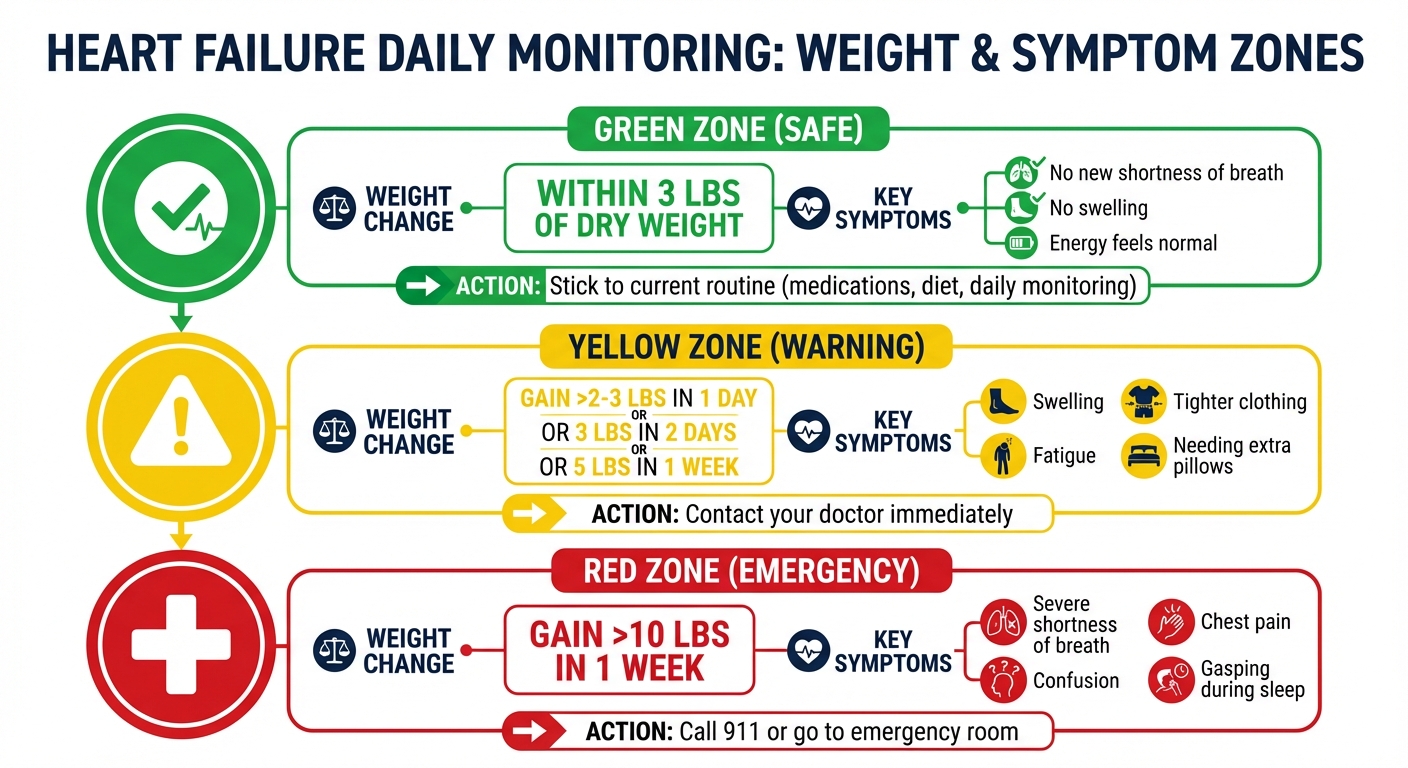
Heart Failure Weight Monitoring Zones: When to Act
Think of your weight data like a traffic light system: green means all is stable, yellow signals caution, and red calls for immediate attention. Knowing which "zone" you’re in can help you decide when to stay the course and when to take action. Here’s a breakdown of these zones to help you manage your health effectively.
Green Zone: Stable Weight and Controlled Symptoms
The green zone is where you want to be. This means your weight is within 3 pounds of your prescribed "dry weight" – the weight measured when you’re not retaining extra fluid. In this zone, you’re likely free from new symptoms like shortness of breath, unusual fatigue, or noticeable swelling. To stay here, stick to your daily morning weigh-ins, follow a low-sodium diet, take your medications as prescribed, and maintain your usual activity level. If you notice any changes, it might be time to move to the next zone.
Yellow Zone: Warning Signs and When to Contact Your Doctor
The yellow zone is a sign that fluid might be building up in your body. You’re in this zone if you gain more than 2 to 3 pounds in a single day, 3 pounds over two days, or 5 pounds in one week. Other signs include swelling, tighter clothing, needing extra pillows to sleep, or feeling more tired than usual. If any of these occur, call your doctor right away. They may need to adjust your diuretic dosage or tweak your salt and fluid restrictions. If these warning signs worsen, it could signal an urgent need for medical care.
Red Zone: Emergency Symptoms Requiring Immediate Medical Attention
The red zone is serious and requires immediate action. If you gain more than 10 pounds in one week or develop severe symptoms like shortness of breath even at rest, intense chest pain, confusion, or gasping during sleep, it’s time to call 911 or head to the emergency room. These symptoms could indicate a critical health issue that needs immediate attention.
| Zone | Weight Change | Key Symptoms | What to Do |
|---|---|---|---|
| Green (Safe) | Within 3 lbs of your dry weight | No new shortness of breath or swelling; energy feels normal | Stick to your current routine: medications, diet, and daily monitoring |
| Yellow (Warning) | Gain of >2–3 lbs in 1 day; or 3 lbs in 2 days; or 5 lbs in 1 week | Swelling, fatigue, tighter clothing, needing extra pillows | Contact your doctor immediately |
| Red (Emergency) | Gain of >10 lbs in 1 week | Severe shortness of breath, chest pain, confusion, or gasping | Call 911 or go to the emergency room |
These weight zones, based on your "dry weight", are essential for daily management and ensuring timely medical intervention. Also, keep an eye out for sudden weight loss – if you lose 2 pounds or more over two days, it could mean your diuretic dose is too high. Let your doctor know about this change as soon as possible.
Lifestyle Changes to Support Weight and Heart Health
Maintaining a healthy weight and supporting heart health goes beyond stepping on the scale every day. Your diet and exercise routine play a critical role in managing fluid levels and overall heart function.
Follow a Low-Sodium Diet and Fluid Restrictions
Sodium is like a sponge in your body – it holds onto water. The more salt you eat, the more fluid your body retains, which can lead to weight gain and strain your heart. Reducing your sodium intake helps your heart work more efficiently and prevents fluid from building up in places like your lungs, which can cause shortness of breath. To stay on track, check food labels and monitor your sodium intake in milligrams daily.
"Weighing yourself each day is the best way to know if you’re retaining water. If your weight goes up quickly, call your healthcare provider. You’ll likely need medicines… This will help your heart work better." – UMass Memorial Health
Tracking your sodium intake alongside your daily weight can reveal patterns. For instance, if you see a sudden 2-pound gain after eating out, the hidden salt in the meal might be the reason. Your doctor may also recommend fluid restrictions. If so, measure all the liquids you drink throughout the day and keep a log. Sharing these records with your healthcare provider can help them fine-tune your care plan.
Dietary changes are just one piece of the puzzle. Medications and physical activity are equally important for managing fluid levels and supporting heart health.
Stick to Your Medication and Activity Guidelines
Your prescribed medications and exercise routine are just as crucial as your diet for managing fluid balance and heart health. Be diligent about taking your medications exactly as directed. Diuretics, often called "water pills", are commonly prescribed to help your body get rid of extra salt and water, reducing the risk of fluid buildup.
Incorporate light daily exercise, like walking, to support your heart and maintain fluid balance. If you notice unusual fatigue or shortness of breath during these activities, jot it down in your log and share it with your doctor. Combined with your weight records, these notes provide valuable insights for your healthcare team to adjust your treatment plan as needed. Together, these lifestyle changes and daily weigh-ins help keep your heart functioning at its best.
For tailored advice on managing your heart health, reach out to your MyCardiologist team for support and guidance.
Conclusion
The strategies discussed above empower you to take charge of your heart health. One of the simplest yet most effective tools is daily weight tracking, which helps manage heart failure by identifying fluid retention before symptoms like shortness of breath or swelling occur.
By monitoring your weight consistently, your healthcare team can make timely adjustments to medications or dietary plans, potentially preventing a crisis. Studies reveal that nearly 50% of hospitalizations for heart failure could be avoided through consistent weight tracking and adherence to care plans.
A scale can uncover issues you may not even feel – some individuals can retain up to 15 pounds of fluid before physical symptoms become noticeable. Catching these changes early allows you to act quickly and consult your doctor when needed.
When paired with proper medication, a low-sodium diet, and regular exercise, daily weight tracking becomes part of a comprehensive care routine. These habits work together to keep fluid levels stable and support your heart’s performance. By consistently tracking, you’re taking proactive steps to avoid emergencies and maintain control over your condition.
Make this routine a daily habit. For tailored advice on managing heart failure and understanding your weight trends, the team at MyCardiologist is ready to guide you every step of the way.
FAQs
What’s my “dry weight,” and how do I know it’s correct?
Your “dry weight” refers to your baseline body weight when you’re not holding on to extra fluid. This is often established after a hospital stay or based on guidance from your healthcare provider. To verify your dry weight, you can consult your provider or use the weight recorded at discharge as a starting point. Keeping track of any shifts from this weight is a key step in managing heart failure.
Should I change my diuretic dose if my weight jumps overnight?
If you notice your weight going up by more than 2 pounds in a single day, it might be a sign that your diuretic dose needs adjustment. This could help manage fluid retention and reduce the risk of worsening heart failure. However, it’s essential to stick to the advice of your healthcare provider and consult them before making any changes to your medication.
What if my weight rises but I feel fine?
Sudden weight gain, even if you’re feeling well, can be a red flag for fluid retention and worsening heart failure. Keeping a close eye on these changes is crucial. If you notice this happening, reach out to your healthcare provider right away. Acting early can help manage the situation and avoid further complications.